
Wedge wire screens have high load-bearing capacity because their V-shaped profile wires are resistance-welded to support rods, creating a rigid, self-supporting structure. This design distributes stress efficiently and resists deformation even under high pressure or heavy material loads. In most industrial filtration systems, the screen strength is primarily determined by profile wire dimensions, support rod spacing, and material strength.
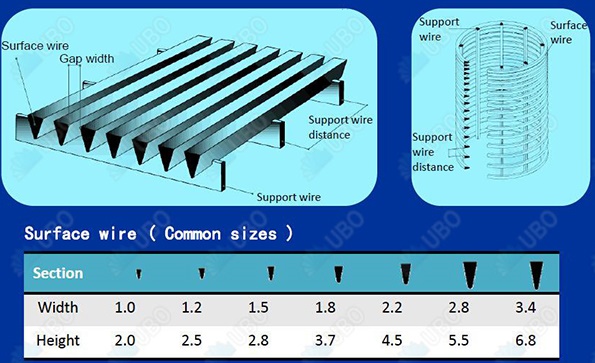
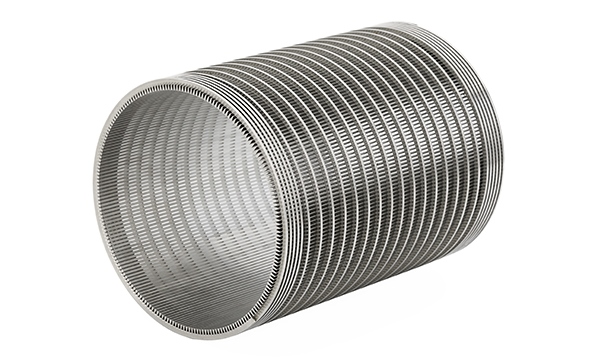
Unlike woven mesh or perforated plates, wedge wire screens are built as a fully welded structure. Profile wires are welded perpendicular to support rods, forming a rigid grid that distributes load across the entire surface.
This structure provides several advantages:
• High mechanical strength and rigidity
• Resistance to bending or collapse
• Stable slot openings under pressure
• Long service life in continuous industrial operation
Because the screen functions as a single structural component, many designs can operate without additional backing plates or reinforcement.
1. Profile Wire Geometry
The surface wire uses a V-shaped (trapezoidal) profile. This geometry transfers mechanical stress toward the base of the wire and prevents slot widening under pressure.
Two dimensions determine strength:
• Profile depth (height) → increases vertical strength and resistance to bending
• Profile width → improves lateral strength and structural stability
Deeper profiles generally support heavier loads and larger spans.
2. Support Rod Spacing
Support rods act as the structural backbone of the screen. Their spacing directly affects:
• Maximum load capacity
• Deflection under pressure
• Overall screen stiffness
Closer rod spacing increases pressure tolerance and reduces deformation, while wider spacing increases open area but reduces structural strength.
Engineers therefore balance flow capacity and structural rigidity when selecting rod pitch.
3. Material Strength
Most wedge wire screens are manufactured from corrosion-resistant metals such as:
• Stainless steel 304
• Stainless steel 316L
• Duplex stainless steel
These materials provide high tensile strength and resistance to corrosion or abrasion in harsh environments.
In some designs, axial load capacities can reach hundreds of kilonewtons depending on screen diameter and structure.
4. Open Area vs Structural Strength
Open area determines how much fluid can pass through the screen, but maximizing open area can reduce mechanical strength.
Engineering design must balance:
• flow rate requirements
• pressure drop
• structural strength
Too much open area may lead to weld fatigue or deformation if the support structure is insufficient.
Engineers typically evaluate load-bearing performance using several indicators:
• Static Load Capacity
The maximum weight the screen can support without permanent deformation.
• Pressure Resistance
Ability to withstand hydraulic pressure across the screen surface.
• Deflection Under Load
Amount of bending when subjected to pressure or material weight.
• Structural Fatigue Resistance
Durability under repeated loading or vibration.
Maintaining slot precision during these conditions is critical for filtration accuracy.
Wedge wire screens are known for their precise slot openings. Typical slot sizes range from 0.025 mm to 20 mm, depending on the application.
Because the V-shaped profile prevents slot expansion, filtration performance remains stable even under significant load or pressure.
High-strength wedge wire screens are widely used in:
• mining and mineral processing
• slurry dewatering systems
• water intake filtration
• pulp and paper processing
• pressure vessel internals
• industrial solid-liquid separation
These applications require screens that maintain both structural integrity and filtration precision under continuous operation.
Frequently Asked Questions
1. What determines the load-bearing capacity of a wedge wire screen?
The main factors are profile wire dimensions, support rod spacing, material strength, and weld integrity. These parameters work together to determine structural rigidity and pressure tolerance.
2. Can wedge wire screens operate without additional support?
Yes. Because the screen is fully welded into a rigid structure, many designs are self-supporting, depending on the load and span.
3. Why is profile depth important?
Profile depth increases bending resistance and structural stiffness, allowing the screen to support heavier loads without deflection.
The load-bearing capacity of wedge wire screens is determined by profile wire depth, support rod spacing, material strength, and weld integrity. Their V-shaped wires, resistance-welded to support rods, create a rigid, self-supporting structure that distributes stress efficiently and resists deformation under high pressure and heavy industrial loads.
In properly engineered designs, wedge wire screens can withstand significant static and dynamic loads while maintaining slot precision and structural stability.



