
A wedge wire resin trap strainer is a downstream safety filtration device designed to capture escaped ion exchange resin beads before they reach pumps, valves, heat exchangers, or sensitive process equipment. It is typically installed after an ion exchange vessel, acting as a final physical barrier to prevent resin loss and secondary damage.
Unlike disposable filters, wedge wire resin traps use precision Vee wire construction with accurately controlled slot openings. This allows liquid to pass freely while retaining resin beads, even under high flow and pressure conditions.
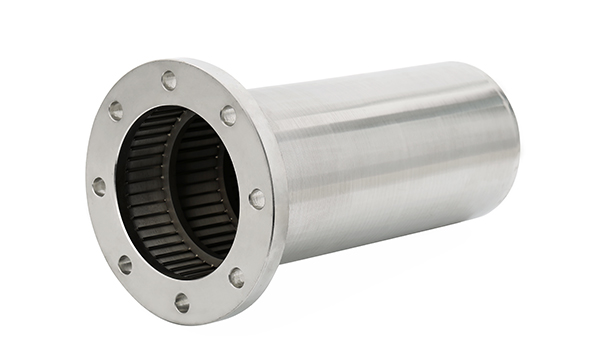
Ion exchange systems are widely used in water treatment, power generation, chemical processing, and pharmaceutical applications. Over time, resin leakage can occur due to distributor damage, underdrain failure, improper backwashing, or aging resin beads.
If resin beads escape:
• Pumps can jam or wear prematurely
• Control valves may fail
• Heat exchangers can foul
• Product water quality may decline
Installing a resin trap strainer provides insurance-level protection, minimizing downtime and avoiding costly repairs.
A wedge wire resin trap works through mechanical retention, not depth filtration.
1. Process fluid enters the trap housing
2. Liquid flows through wedge wire slots
3. Resin beads larger than the slot size are retained
4. Clean fluid exits with minimal pressure drop
Because wedge wire slots widen in the flow direction, captured resin does not easily blind the screen. This makes the design clog-resistant and easy to clean.
Compared to perforated plates or mesh screens, wedge wire resin traps offer clear technical advantages:
• Accurate slot size control for consistent resin retention
• Smooth flow paths for low pressure drop
• Non-clogging geometry due to V-shaped wire profile
• High mechanical strength for industrial pressure ratings
• Long service life with repeated cleaning cycles
These properties make wedge wire the preferred choice for high-flow, continuous-duty resin trap strainers.
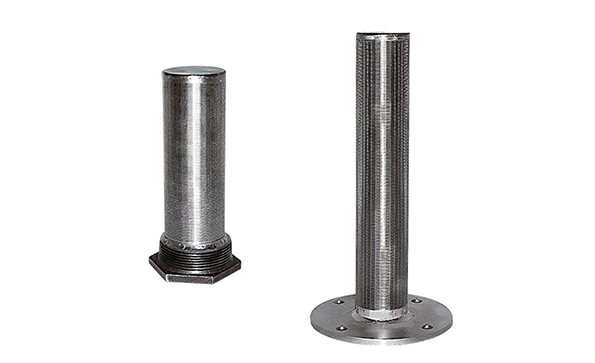
Most ion exchange resin traps for sale are manufactured from stainless steel to ensure corrosion resistance and mechanical stability.
Typical options include:
• SS304 resin trap
• SS316 or SS316L resin trap for aggressive media
• Custom alloys for special chemical environments
Slot sizes are selected based on resin bead diameter, commonly:
• 0.2 mm
• 0.3 mm
• 0.5 mm
Custom precision slots on request
A resin trap is normally installed:
• Immediately downstream of an ion exchange vessel
• Before pumps, control valves, or heat exchangers
• In condensate polishing systems
• In mixed-bed or deionization units
Both inline pipeline resin traps and flanged resin trap strainers are widely used, depending on system layout and maintenance preferences.
These components serve different but complementary roles:
• Underdrain nozzles support the resin bed and distribute flow inside the vessel
• Resin traps capture resin that escapes due to abnormal conditions
A resin trap does not replace an underdrain system; it provides secondary protection when internal components fail or resin migrates unexpectedly.
Wedge wire resin trap strainers are commonly used in:
• Industrial water softeners
• Demineralization systems
• Power plant condensate polishing
• Boiler feed water treatment
• Chemical processing plants
• Pharmaceutical and electronics-grade water systems
In each case, the goal is the same: prevent resin carryover and protect downstream assets.
One of the advantages of wedge wire resin traps is simple maintenance:
• Captured resin beads are easily removed
• Screens can be flushed, brushed, or backwashed
• No disposable cartridges are required
• Long service intervals reduce operating costs
Routine inspection ensures consistent performance and early detection of upstream issues.
When selecting a resin trap strainer, consider:
• Resin bead size and type
• Required slot opening
• Flow rate and pressure conditions
• Installation orientation (vertical or horizontal)
• Connection type (flanged or threaded)
• Material compatibility with process fluid
A properly specified resin trap delivers low pressure drop, high reliability, and long-term protection.
A wedge wire resin trap strainer is a small component with a large impact on system reliability. Capturing escaped resin beads before they cause damage, it protects equipment, maintains water quality, and reduces unplanned downtime.
For operators seeking an ion exchange resin trap for sale, wedge wire construction remains the industry-standard solution for durability, precision, and long-term value.



