
Country: Saudi Arabia
Project: 5,000 TPD Cement Production Line – Centralized Lubrication Station for Ball Mill Heavy-Duty Gearbox
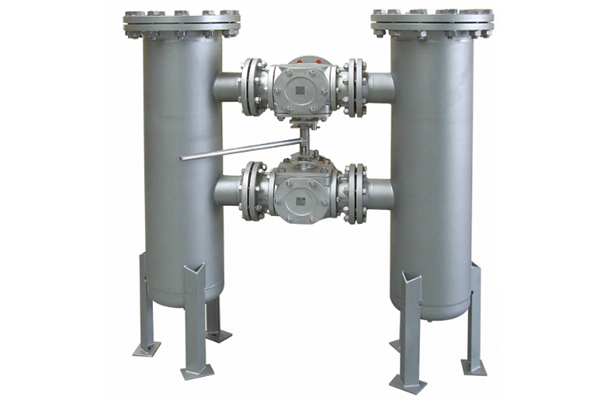
Technology: SSBF-QGK200 Duplex Cartridge Filter
The Challenge
In the harsh environment of Saudi Arabia's cement industry, equipment reliability is not just a metric—it's a production lifeline.
A 5,000-ton-per-day clinker production line depends on the continuous operation of its ball mill, the heart of the grinding process. At the core of that mill sits a heavy-duty hardened gearbox, which requires a constant, high-volume flow of ISO VG 46 gear oil for cooling and lubrication. The system circulates at 1,500 liters per minute under operating pressures of 0.3–0.5 MPa, with piping designed for 2 MPa.
But the desert environment posed two existential threats to this critical system.
Threat One: The Dust Invasion. Saudi Arabia's year-round sandstorms, combined with the intense clinker dust generated inside the plant, created a continuous assault of high-hardness micro-particles on the lubrication system. These particles—fine enough to bypass standard filtration but hard enough to accelerate wear—were clogging disposable glass-fiber filter elements at an alarming frequency. For a plant in the Middle East, relying on disposable consumables meant not just high material costs, but exorbitant international procurement and logistics expenses that strained the operational budget.
Threat Two: The Flow Resistance Paradox. At 1,500 L/min, even a slight increase in internal flow resistance within the filter could create severe back-pressure on the low-pressure circulation pump outlet. The result? Insufficient oil supply to the gearbox, triggering high-temperature alarms on the bearings—a warning sign that, if ignored, could lead to catastrophic gearbox failure and days of unplanned downtime.
The plant operators were caught between two untenable options: accept frequent, costly filter changes, or risk the pump back-pressure that threatened to shut down the entire production line.
The Solution
After evaluating multiple filtration approaches, the plant's engineering team selected YUBO's SSBF-QGK200 duplex cartridge filter—not as a simple replacement, but as a fundamental redesign of their filtration strategy.
Design Decision 1: Rethinking the Valve. The system operates at 1.6 MPa—low pressure but extremely high flow. Traditional ball-valve configurations, with their narrow internal passages, would have created unacceptable flow resistance. The solution was a flap-type diverter valve structure: a large-channel linkage mechanism operated by a top-mounted handwheel. This design allows smooth, uninterrupted oil flow switching while keeping the full-load initial pressure drop to approximately 0.02 MPa.
Design Decision 2: Rethinking the Consumable. Instead of disposable glass-fiber elements, the filter uses 25-micron SUS304 stainless steel five-layer sintered mesh filter elements. These elements resist deformation under the high-flow, medium-to-low pressure conditions of the lubrication system. When a clogging alarm triggers, on-site personnel simply remove the elements and clean them using an ultrasonic cleaner—reusing them indefinitely.
The Results
The upgrade delivered measurable, verifiable outcomes that transformed the plant's lubrication economics:
1. Flow Resistance Eliminated. The wide-flow-channel design completely eliminated the risk of bearing high-temperature trips caused by flow resistance. The system now operates without the persistent threat of pump back-pressure, ensuring uninterrupted production.
2. Consumable Costs Slashed. The cleanable, reusable filter elements saved the Saudi plant over 70% annually on filter element procurement and international shipping costs. What was once a recurring operational expense became a one-time capital investment.
3. Operational Reliability Restored. The plant no longer faces the trade-off between filter changes and pump performance. The lubrication system runs consistently, the gearbox operates within design temperatures, and the maintenance team can focus on preventive care rather than emergency response.
Why This Matters
This case illustrates a broader principle in industrial filtration: the most effective solutions often come not from incremental improvements, but from rethinking the fundamental assumptions of the system. By addressing both the dust challenge and the flow challenge simultaneously—rather than treating them as separate problems—YUBO's duplex cartridge filter delivered a solution that was greater than the sum of its parts.
For cement plants operating in harsh environments, where dust is unavoidable and production cannot stop, the lesson is clear: the right filtration strategy is not an expense—it's an investment in operational continuity.



